



Before Medicaid home and community-based services became a thing, the life I’m living right now just really wasn’t possible.

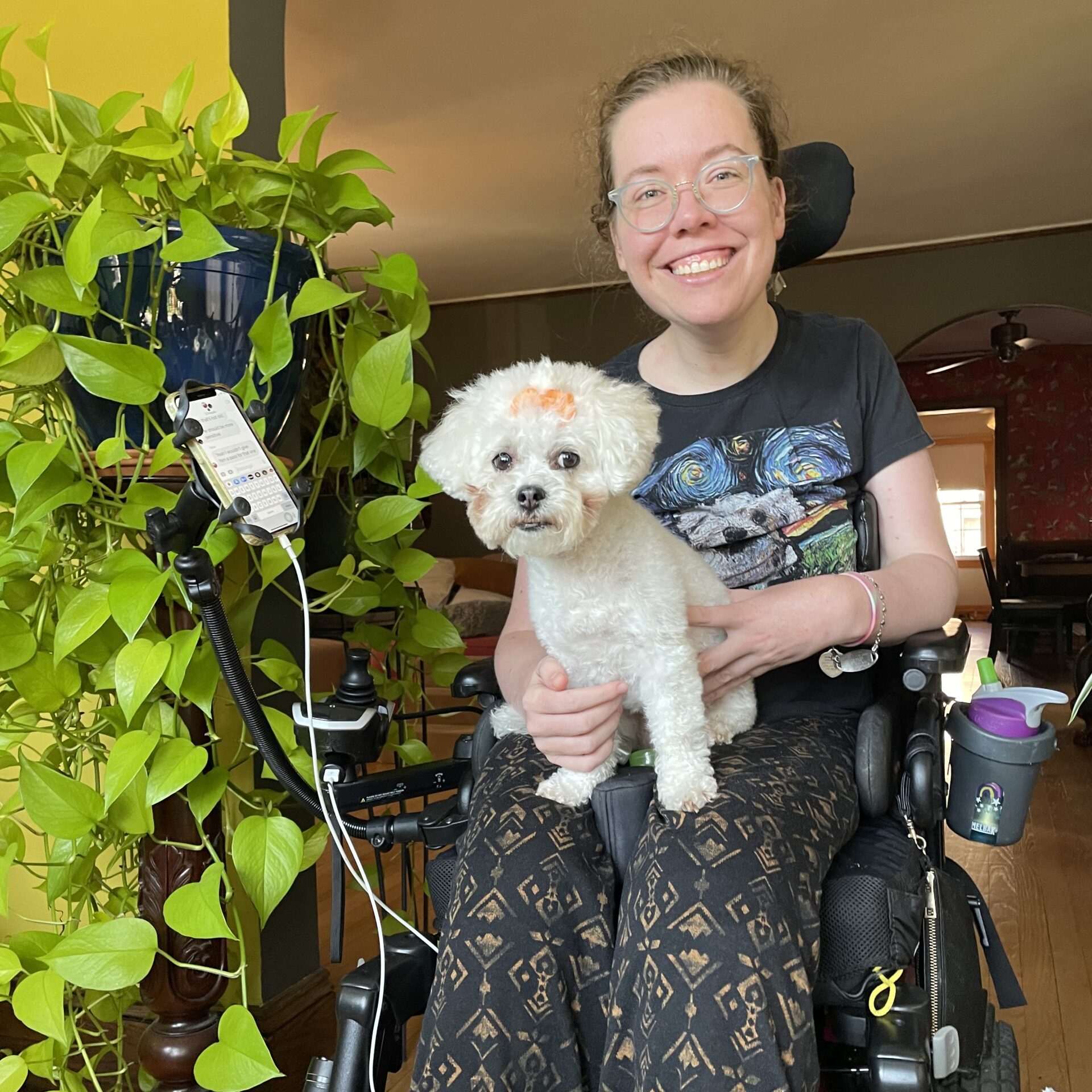
Kathleen Downes is 32 years old and lives on Long Island where she works as a social worker and a board-certified patient advocate. Kathleen was born with cerebral palsy, a lifelong physical disability that affects all four limbs and her motor functions. She uses a wheelchair and needs assistance with every activity of daily living, including bathing, dressing and eating. Medicaid makes it possible for her to live in her community, not in an institution.
“Medicaid is the only long-term funder of assistance with those kinds of tasks,” Kathleen said. Most people do not realize that Medicaid is the primary, and in many cases only, funder of custodial care for people with disabilities. Without it, Kathleen would have to turn to institutional care, a setting she has been able to avoid entirely because of home and community-based services covered through Medicaid.
Medicaid also gives Kathleen independence from her family. Her parents, like so many parents of adults with disabilities, are aging. Home care services give them respite and give Kathleen room to live her own life. “Before Medicaid home and community-based services became a thing, the life I’m living right now just really wasn’t possible,” she said.
In addition to home care, Medicaid covers costs not picked up by her commercial insurance. Living with a complex physical disability requires extensive specialist care. “Having a long-term physical disability is very, very expensive,” Kathleen said. Medicaid offsets those costs and makes her life financially manageable.
Kathleen is concerned that assurances from legislators that people with disabilities will be protected from proposed cuts fundamentally misunderstand how the program works. “It’s not really possible to make a large cut on one piece of the program and not affect all the others because they’re kind of wrapped together,” she said. When states face reduced federal Medicaid funding, they are not free to protect every service equally. They must prioritize mandatory services over optional ones. And a large share of the services that are classified as optional are precisely the ones tailored for people with disabilities.
In New York, those optional services include home and community-based services waivers, specialized Medicaid expansion packages that serve people with developmental disabilities, traumatic brain injuries, and medically complex children. Kathleen herself uses the developmental disability waiver, which covers environmental modifications to make her home accessible, vehicle modifications, and community habilitation services that help her build independent living skills. None of those are guaranteed under a standard Medicaid package.
The cuts would also ripple into therapy services. Physical therapy, speech therapy, occupational therapy and respiratory therapy are all classified as optional under Medicaid and are all disproportionately used by people with disabilities. Reducing or eliminating those services would directly harm the people who rely on them most.
For Kathleen, the conclusion is straightforward: you cannot promise to protect people with disabilities while simultaneously cutting the services they depend on to survive.
Add your voice to help us continue to push for the best health and health care for all.
SHARE YOUR STORY