



I think American people are dying daily because they go without medication.

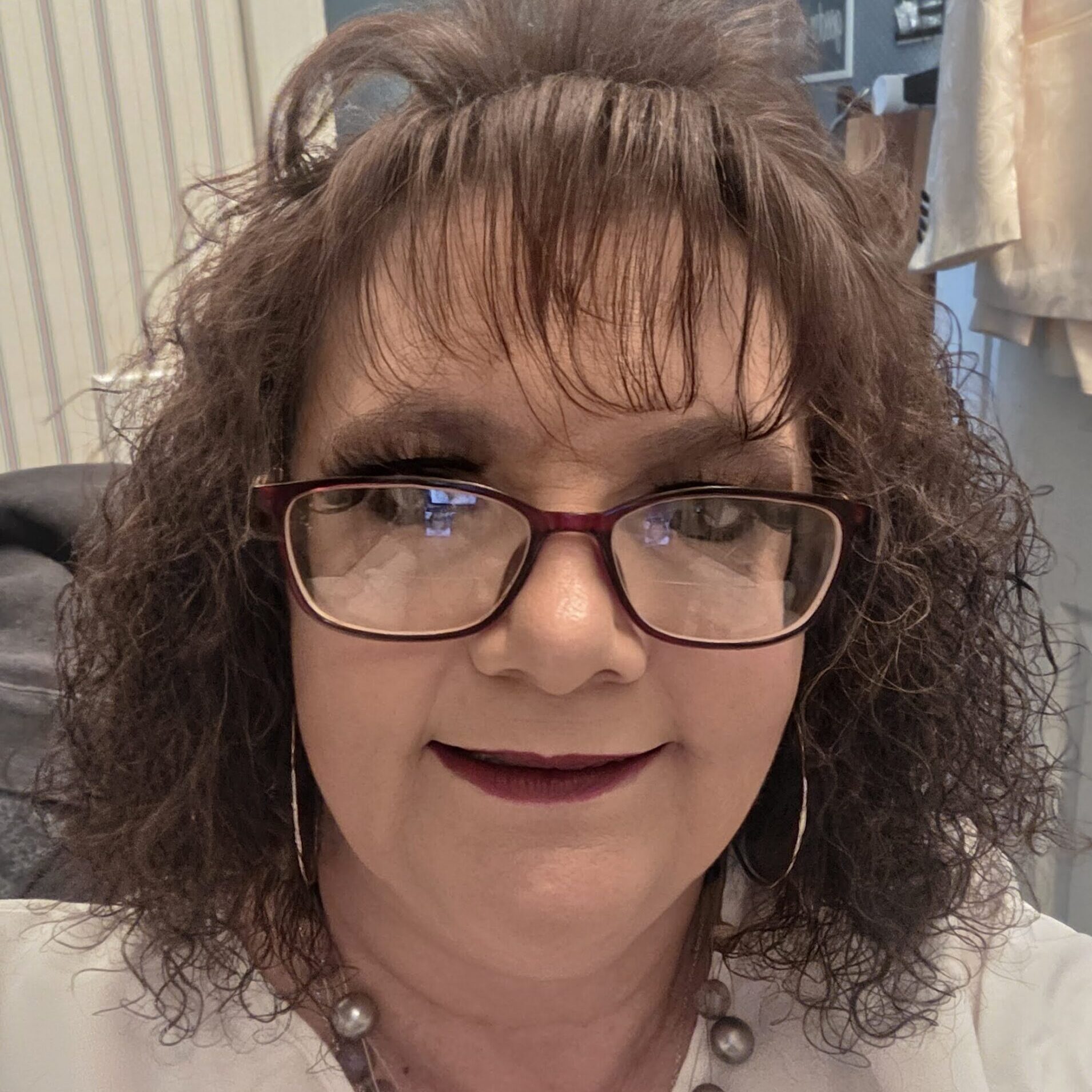
For more than 30 years, Michelle Fry worked in the health care system in Illinois. She built her career in primary care, dialysis and orthopedics, spending 24 years in orthopedics alone. She started in clerical roles and answering phones, then moved into scheduling surgeries and anesthesia visits, registering patients, admitting them, and discharging them. She also helped them start the process of enrolling in insurance and spent much of her time dealing with insurers. Over that time, she shared she has “seen a lot of change in the medical field, mainly cost,” adding, “I think the cost is outrageous. I don’t think it should be that expensive.”
She saw how the system functioned behind the scenes. Now, as a patient, she is experiencing it for herself.
Michelle is insured through Medicare and a supplement plan with Humana. She considers herself fortunate. “I’m fortunate enough that I can pay for my medical expenses as far as insurance goes,” she said. But even with coverage, prescription drugs stretch her budget to the brink.
She lives with rheumatoid arthritis and was prescribed Humira. “One of them, Humira, is outrageous,” she said. “I think my insurance paid $80,000. It was just insane. It blew me away.”
Her copay was another shock. “My copay for it was over $700. I couldn’t pay for that … Who can pay $700 to over $1,000 a month for one prescription?”
When her insurance stopped covering Humira, she had to switch medications. The next option, though significantly less, still takes a toll on her wallet. “I’m fortunate to have what I have, but $200 becomes hard sometimes.”
Ultimately, she and her care team chose an infused medication administered in a hospital setting. “I go once a week for an infusion,” she shared. But the financial logic still puzzles her. “You would think, why pay the cost for me to go to a hospital versus taking an injection at home? You would think the injection at home would be a lot cheaper than my insurance paying for hospital expenses. It just doesn’t make sense to me.”
For now, she shared, “Medicare pays 80%, and then my supplement pays what Medicare doesn’t pay.” Fortunately, the infusion works well and is keeping Michelle’s condition stable.
But that stability has been hard won. Michelle has been disabled since 2015. What began with neuropathy and gait issues progressed quickly. “I had just been diagnosed with neuropathy. I was having gait issues. I was using a cane. Then it went from finding out I had neuropathy to I had a meningioma on my right frontal brain lobe. Then I was diagnosed with fibromyalgia. Then just within the past couple of years, I was diagnosed with RA. It’s been one thing after another. My medical history, it keeps adding to each other.”
She has endured multiple back injections, RFA procedures, and in December had a nerve stimulator implanted to address back pain and neuropathy.
After decades working with insurance companies, Michelle understands their processes. “I understand the insurance side as to why they need certain things or certain steps done. I completely understand that,” she said. But she believes the system fails when it delays care or forces impossible financial choices. “It needs to be done in a timely manner, that way the patient doesn’t have to suffer, or they don’t have to worry about the cost.”
Michelle believes rising medical and prescription costs hit people with the fewest resources the hardest. “Those that are in poverty, don’t have a chance with the rising costs of medical [care] and prescriptions,” she said. “It’s very unfair to them that they have to choose food, water, electric, or go without.” She added, “I think something that’s not addressed is, I think American people are dying daily because they go without medication.”
She does not argue that care should always be free. “I’m not saying that they should absolutely get their medical free or their prescriptions free, but provide something for the lower class, the middle class, or those that are in poverty.” What upsets her most is what she sees in her community. “It just really aggravates me to know that, and upsets me to know that people have to go without and have to choose. I don’t think they should have to do that.”
Michelle believes more could have been done to rein in drug prices. “I think the government, if they cared about the people, something more would be done. Things wouldn’t have gotten so way out of hand.”
After a lifetime supporting patients from behind the desk and over the phone, Michelle now speaks as one of them. “I see where people are coming from now,” she said.
Now, she is speaking up.
“I want to speak out for those that are less fortunate and that don’t speak out,” she said. “I want to share my story and be an advocate for those that don’t.”
Add your voice to help us continue to push for the best health and health care for all.
SHARE YOUR STORY