



I had to choose groceries over insurance.

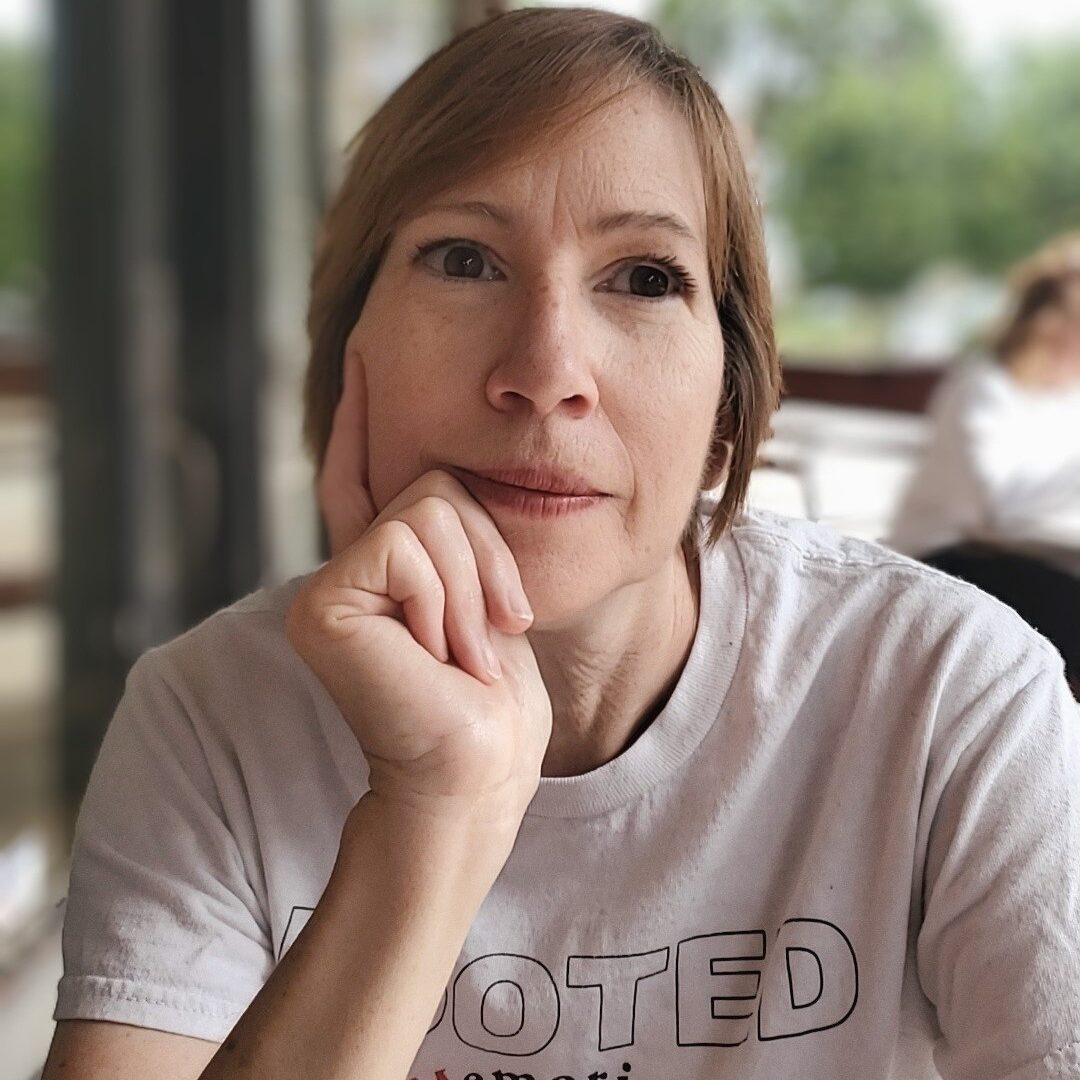
Susan Alleman is a 57-year-old resident of Lincoln, Nebraska, who spent most of her adult life uninsured and hoping for the best. Raised in New Orleans, she earned a master’s degree in mental health counseling before finding her true calling in social justice and anti-war advocacy, spending 25 years working for a peace and justice nonprofit. She had seen the health care system up close — navigating it alongside her partner during his long illness before he died of cancer in 2021, and then again with her father in 2023. By 2024, it was her turn.
Susan first enrolled in Marketplace coverage around 2011 or 2012, but when her partner’s illness stretched their finances to the breaking point, she was forced to make an impossible choice. “I had to choose groceries over insurance,” she said. She went without coverage from 2018 until 2023, when the enhanced premium tax credits made a plan affordable again. The timing proved critical. Shortly after re-enrolling, she was diagnosed with cancer.
Even with coverage and the enhanced premium tax credits in place, the financial weight of her treatment was staggering. Her deductible reached $7,500 and her out-of-pocket maximum was around $9,000. She underwent six months of chemotherapy and received Keytruda, an immunotherapy drug, with each infusion costing roughly $42,000. “That’s a portion of one treatment,” she noted. The insurance made those costs survivable, but barely. Susan, who describes herself as middle to low income, understands all too well how a diagnosis forces people to choose between their lives and their livelihoods. “That’s a choice no one should have to make,” she said.
Cancer did not leave Susan unchanged. Chemotherapy damaged her eyesight — her vision, once close to 20/20, deteriorated to the point where she now needs glasses to drive. She lives with lymphedema risk, joint swelling and the chronic fatigue and muscle weakness that follow intensive treatment. Occupational therapy and physical therapy could help manage these lasting effects, but under her current plan, those services are financially out of reach.
When the tax credits expired, Susan’s situation worsened sharply. She was forced to drop to the lowest coverage tier on the Marketplace, and even then, her premium increased by several hundred dollars a month. Her new plan came with a high out-of-pocket maximum of over $10,000, no deductible, and copays she is still trying to decode. “It’s very confusing,” she said, “and it’s definitely less helpful than my insurance has been in the past.” The plan’s lack of transparency has left her unsure what is actually covered and how costs will be calculated when she needs care.
The consequences are already showing up in her medical decisions. In April, when it was time to see her oncologist for cancer follow-up care, the specialist copay was cost prohibitive. She went to her primary care doctor instead. Even that visit cost her close to $250. “I can’t imagine what it would have been if I would have gone to see the oncologist,” she said.
Beyond the costs, Susan is deeply frustrated by the power insurance companies wield over the care her doctors recommend. She has had tests denied and medications refused. “They are undermining our very treatment, our very care, through these random decisions made by an insurance corporation,” she said, “all for their cost benefit, not for the health of a human being.” In her view, that power does not belong to insurers. “They should not have the power to decide what our care looks like.”
Susan believes the health care system should be built to keep people healthy, not to generate profits. “Can we go back to care, patient-centered care, preventative care, things that would actually help all of us to be better citizens,” she said. For someone who has spent a lifetime advocating for others, the fight for her own health has only deepened her conviction that access to care is not a privilege — it is what allows people to show up fully in their communities, their families, and the world.
Add your voice to help us continue to push for the best health and health care for all.
SHARE YOUR STORY