



I went into debt just to not leave my children without a mother.

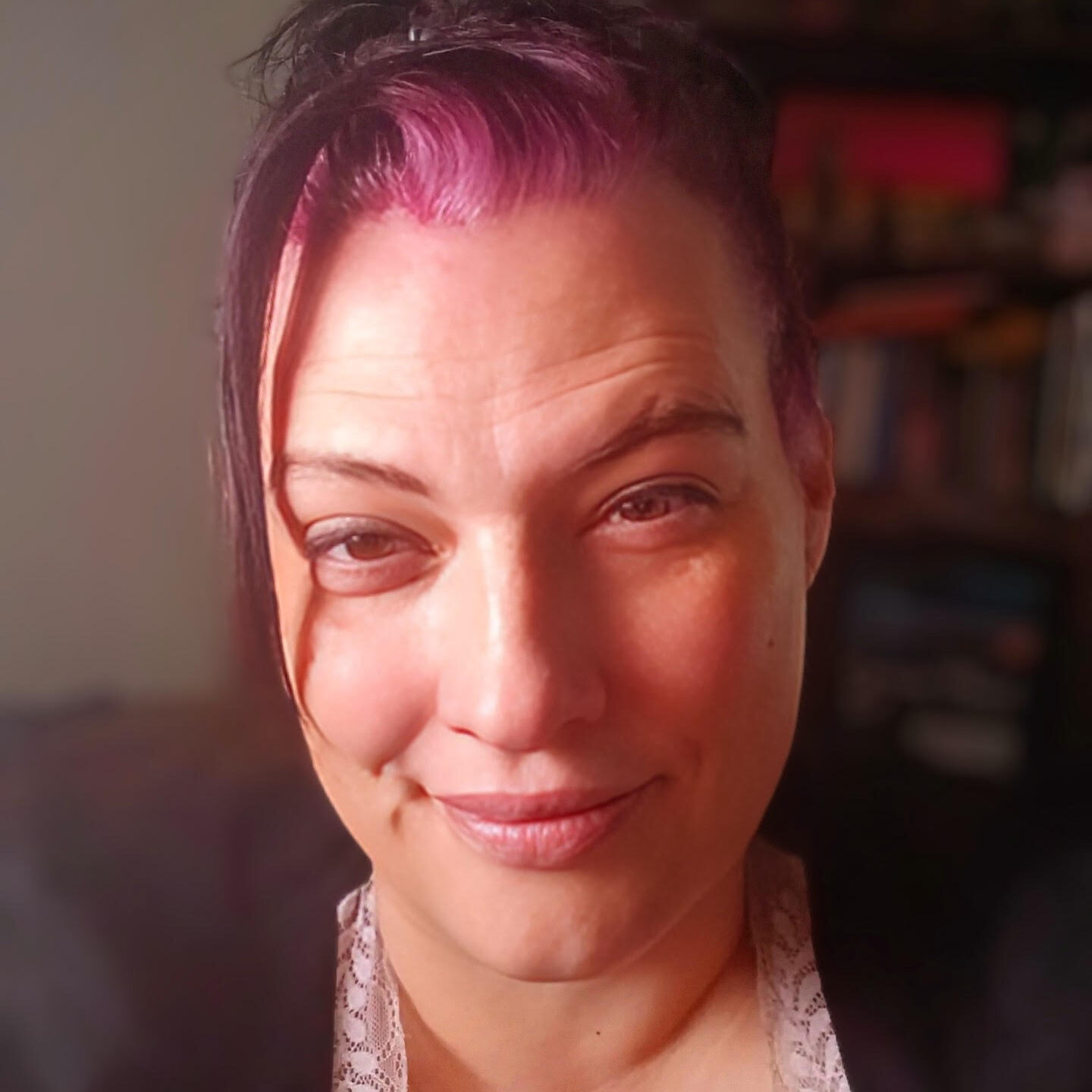
Cheri Stollar grew up in Lincoln, Nebraska, raised largely by her grandparents after her mother fled a violent home in Oregon. “My dad had really severe PTSD from the war, and he literally tried to end my mother’s life when I was an infant, so she was terrified,” Cheri said. Her mother went to work at a factory while her grandparents took care of Cheri, and her mother struggled with addiction and mental health issues of her own. “It did definitely have a huge impact on me,” Cheri said, “but it also gave me like a lot of motivation for what I do as a mental health provider.”
That path has not been easy or linear. Cheri is a survivor of human trafficking — “I barely survived that with my life,” she said — and is in recovery from addiction herself, working through her own PTSD symptoms along the way. She began college at Southeast Community College’s human services program around 2000, graduated in 2004, and went on to Nebraska Wesleyan for a bachelor’s degree in social work. Life intervened more than once. “I had to take a break in 2007 because my life was way too chaotic with my ex, my kid’s dad,” she said. She picked her education back up in 2010, and later returned again in 2016, finishing her master’s in clinical mental health counseling in 2021.
Today, Cheri is a provisionally licensed therapist in Nebraska working toward her independent mental health practitioner license. She focuses her practice on BIPOC and LGBTQ communities, survivors of human trafficking, and survivors of abuse. “My primary thing that I tell people I specialize in is trauma,” she said, “and the mind body spirit impact of trauma, how it affects our development as children growing up.” Her goal, as she put it, is “helping the spirit feel safe to reside in one’s body.”
Cheri has raised six children largely on her own, with little support from either father. “Neither dad has been really a present parent for my girls,” she said. “I’ve been pretty much mom and dad.” One father is incarcerated and unable to pay child support; the other, she said, “chooses not to pay child support.” “We don’t get any support,” she said, “and I have to tell people time and time again, I don’t have family I can call for help because my family’s all struggling too.”
Medicaid has been part of her family’s life from the beginning. “I gave birth to children on Medicaid,” she said. “They’ve been on Medicaid their whole lives. I’ve never been able to afford any other kind of health insurance for my kids.” Without it, she said, she would lose access to the medication treating her ulcers and to the therapy she relies on to manage her own trauma. “As much as I hate to admit it, it does impact my functioning sometimes,” she said. “Losing that [coverage] means I lose therapy. That means I’m not functioning well for my clients. I’m not functioning well for my children or myself.”
Cheri also pointed to a harder truth many families face: state authorities can view a parent as unfit for missing their children’s medical checkups, yet Medicaid is often what makes those appointments possible in the first place. “So that’s a double-edged sword right there,” she said.
Cheri’s own health has been shaped by years without insurance. She has severe anemia after giving birth six times, including a hemorrhage during her son’s delivery when her placenta and uterus grew together. She developed an abscess on her liver that doctors told her could be genetic, and she lives with severe insomnia and night terrors. At one point, her health declined sharply enough that she ended up in the emergency room. “I might’ve, if I hadn’t gone to the hospital when I did, I would have died,” she said. She did not have Medicaid at the time. The hospital granted a waiver that reduced part of the bill, but she still couldn’t cover roughly $2,000 of it. “I went into debt just to not leave my children without a mother,” she said, “and that’s just to me, crazy.”
As a provider, Cheri sees the consequences of Medicaid work requirements up close. She estimated that 95% of the clients in her therapy practice rely on Medicaid. She said she has already lost clients who could not meet work requirements because of their mental health conditions, even while they were still in the process of applying for Social Security. “These people have pretty severe diagnoses,” she said, describing one client with borderline personality disorder who is now unable to continue therapy. “That’s a diagnosis that somebody needs help with, and yet they’re also a higher risk for suicide and self-harm.” She called the work reporting requirement “very unfair” and “downright harmful.”
She also raised similar concerns about her own situation as it pertains to reporting requirements. “I do have concerns,” she said. “I guess I work, but my schedule isn’t like a clock in clock out nine to five. It basically revolves around meet my client’s needs,” she said, pointing also to her children’s appointments and school schedules.
Despite everything, Cheri keeps working — building a practice she describes as community based rather than a traditional private practice. She also lives with a vision impairment that keeps her from driving, relying on a daughter or the bus to get where she needs to go. “I can show up to work every day. I can show up for my children to make good sound decisions,” she said, adding that Medicaid is what makes all of it possible.
Add your voice to help us continue to push for the best health and health care for all.
SHARE YOUR STORY