



Without Medicaid, I don’t know if I would have gone to the hospital. I probably would have just tried to muddle through it until we had an even bigger emergency.

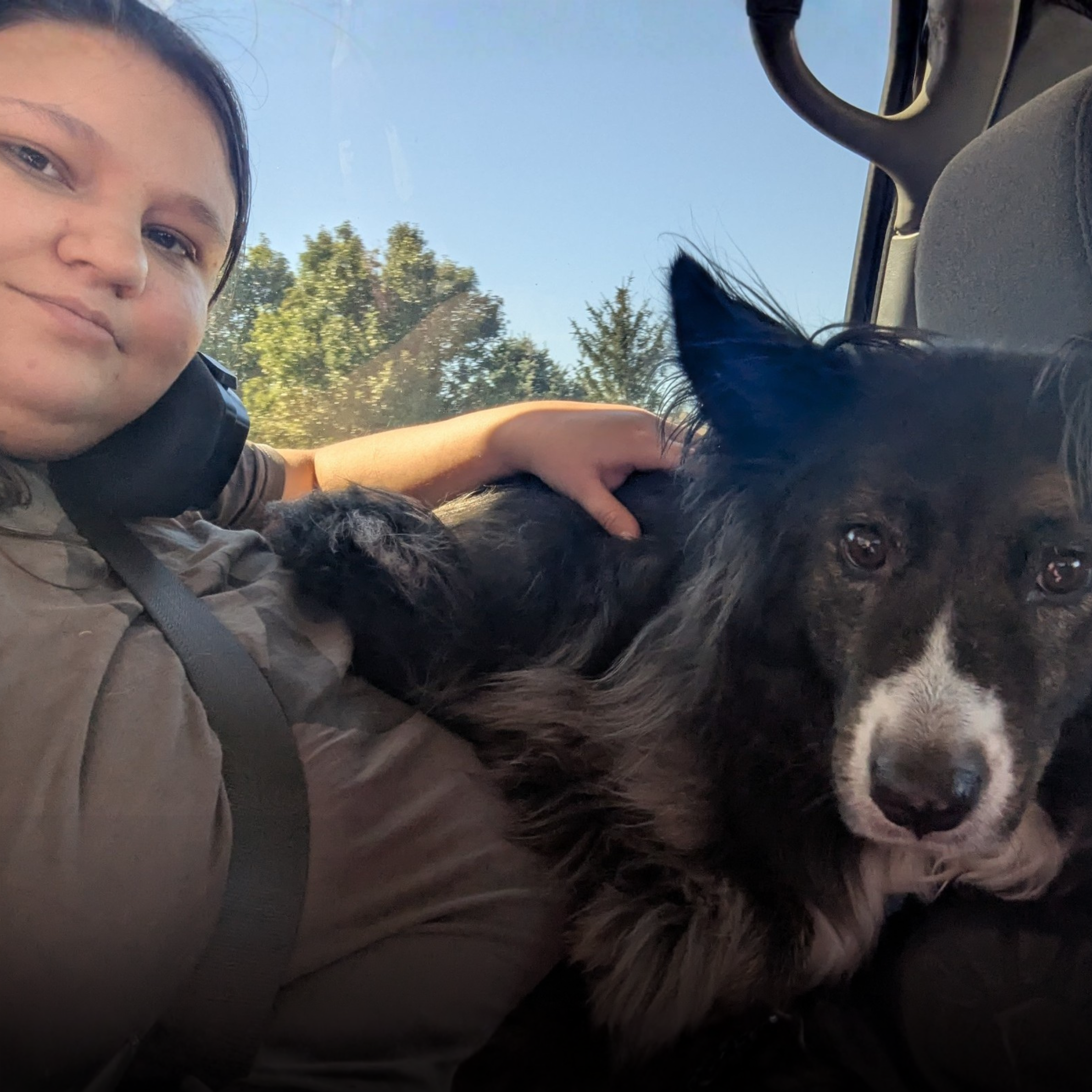
Crystal Schroer is a disabled 30-year-old non-binary artist from Kearney, Nebraska, navigating a complex web of disabilities with the help of Tarot, a service dog. Tarot is trained to do sensory grounding. She leans on her human to bring them back to reality when their disabilities make it hard to stay present. They hold a Bachelor of Fine Arts from the Kansas City Art Institute. They rely on Medicaid expansion to access the mental health care and medications that make daily life possible.
Their health needs are significant. They are autistic, have ADHD, depression and anxiety. They have panic attacks, difficulty in social situations, and suicidal ideation. These conditions require medication, ongoing therapy and their service dog to manage. Managing all of this while trying to hold down a job has been a balancing act with high stakes. “Being alive is kind of a prerequisite to being able to work,” they said.
For a stretch of time, they worked in customer service. But as their disabilities made certain days harder to manage — sometimes slowing their speech and ability to process information— the environment became untenable. After the difficult political climate made things worse, they left their last job in December 2024. “I was not functioning. I was burnt out every day. I was having suicidal ideation every time I had to go to work,” they said. “So I had to step away from that.”
Finding new work in Kearney is not simple when you have a service dog. “When you have a service dog, your job options are automatically limited,” they explained. The majority of jobs available in small, rural Nebraska are in the manufacturing, medical, and food service industries, which either pose safety risks for a working dog or run afoul of health department rules. Customer service, which they had already found damaging to their mental health, remained an uncomfortable option.
Throughout the period of unemployment, Medicaid has been their lifeline. When they developed pneumonia last October, they went to the emergency room and stayed for two days, Tarot at their side. “Without Medicaid, I don’t know if I would have gone to the hospital,” they said. “I probably would have just tried to muddle through it until we had an even bigger emergency.” An inhaler prescribed afterward would cost around $300 without coverage — well out of reach on an income that has been approximately zero since leaving their last job.
Beyond physical health, Medicaid has funded the mental health care they credit with keeping them stable. After trying several medication combinations, they have finally found a regimen that is working. The thought of losing access to those medications as work requirements reshape Medicaid eligibility frightens them deeply. “One of the things that has been a huge weight on my mind is the idea of losing access to my medications because they’re working now,” they said. “This is the first time where I felt like they actually are making a difference and making things better.”
They have also encountered ableism at nearly every turn — from a pastor who told them to “just outgrow” anxiety and their need for a service dog, to a doctor who wrongly claimed only mobility service dogs were allowed in the clinic, to a security guard who unlawfully demanded paperwork. They navigate these moments by citing the ADA from memory and, when necessary, gently correcting people who do not know better. “There are people who accuse you of faking,” they noted. Mental health carries its own particular stigma in rural Nebraska. “If you have anxiety or depression, you’re seen as a weak and immoral person, not as having a thing that needs a certain level of medical care,” Crystal said.
Add your voice to help us continue to push for the best health and health care for all.
SHARE YOUR STORY