



In our current world, not having health insurance feels like a death sentence.

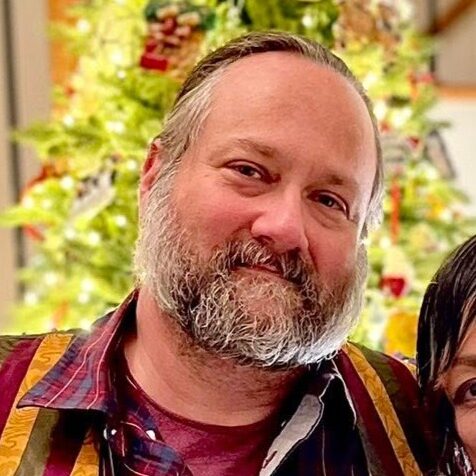
James Bowers is 53 years old and lives in Durham, North Carolina. A former attorney, he now works as a freelance photographer. “My wife and I are both in our 50s, have some of the typical problems that 50-something-year-old people tend to have. We both also have psychiatric conditions,” he said. “My wife is bipolar and I suffer from bouts of severe depression. That’s part of why I quit practicing law, and why I’m a photographer now.”
Last year, insurance companies were pulling out of the North Carolina marketplace one after another, and the plan James and his wife had in 2025 was among them. “I wasn’t really sure where we were headed with our insurance,” he said. Rather than sign up in the middle of the ongoing debate over marketplace subsidies, he decided to wait. He and his wife stocked up on their medications, planning to go without coverage in January and enroll during the window that opened in February. In late December or early January, he went to healthcare.gov, where he found “really only one affordable health plan left in North Carolina,” through a company called Ambetter.
He signed up and paid the first premium, about $96 a month, to lock in the policy. A few weeks later, a bill arrived from Ambetter for around $1,300. When he called to find out what had happened, a call that, like every call to the insurer, took about an hour, he learned that when his previous insurer left the marketplace, he had been automatically enrolled in a separate Ambetter policy. “I don’t, didn’t know what the heck this was for,” he said of the bill.
James told Ambetter he had never agreed to a $1,300-a-month plan and asked them to cancel the auto-enrolled policy while keeping the one he had signed up for through healthcare.gov. “They assured me, oh yeah, yeah, that’s, that’s what we’ll do. Don’t worry. It’s not going to cancel your, your new policy. It’ll just cancel the one that you were automatically signed up for,” he said. Weeks later, a letter arrived saying his insurance had been canceled for failure to pay the $1,300 premium he had never agreed to, and canceling that policy had wiped out both plans. When he called back, he was told, “well, we can’t fix it. You’ll have to go through the marketplace.”
He turned to the federal marketplace next, and found its staff easier to work with than the insurer. “They tried to set up a three-way call and the insurance company hung up,” he said. Over the weeks that followed, James made “a few dozen calls” between Ambetter and healthcare.gov staff, with each side pointing at the other, even as his case was marked “urgent” because representatives knew he and his wife had chronic conditions requiring ongoing care. During that stretch, his wife, also a photographer, was having problems with her retina in her dominant shooting eye and could not get in to see a doctor.
After six weeks without insurance, James received notice, “the day after the extended window for signing up for health insurance had passed,” that Ambetter had refunded the premium for the policy he had actually signed up for, closing out his account. With the enrollment period over, the only coverage left available to him and his wife was a private, unsubsidized policy that he estimated would cost “like $2-3,000 a month.”
While the dispute dragged on, James was several months into a course of electroconvulsive therapy, which he described as “very effective at treating depression, but extremely unpleasant.” Given three times a week for several weeks, it left him “exhausted the next day,” but pulled him back from a depression so severe that he couldn’t get out of bed in the morning or work. He remained on an SSRI and an atypical antidepressant afterward, medications not meant to be stopped abruptly. His wife, who has bipolar disorder, faced a similar risk, needing to gradually titrate down her own medications rather than stop suddenly. Both also have thyroid conditions requiring daily medication. When James explained the danger of going without these medications to Ambetter, he was told, “oh, well, yeah, we’re going to elevate your claim. We’re going to elevate your situation and we’ll all be taken care of. Don’t worry.” Then, he said, “they decided they weren’t going to do anything. And then they didn’t care if I was on my meds or not.” Friends with similar conditions gave the couple what he called “bridge meds” to get them through. “People shouldn’t have to do that,” he said. “In one of the richest countries in the history of the world, that’s not how citizens should be living. That’s not how people who live here should be living. But we are.”
With no coverage and no way to pay for a private plan, James learned that North Carolina’s major hospital systems had reached an agreement with the state: in exchange for a higher Medicaid reimbursement rate, they would provide free care to people who were uninsured but did not qualify for Medicaid. Through what he called “a very simple process,” he enrolled in a hospital charity care program, which he and his wife have used for the past year.
The coverage comes with real limits. “We’re limited to seeing only doctors within the Duke system, only anything in the system. If anything were to happen, we go outside the Duke system, we would have zero coverage,” he said. That’s a genuine risk for the couple, who travel across the Southeast for photography work. “So anytime we leave the triangle, we run the risk of winding up in a hospital or an emergency room where we have zero coverage,” he said.
James said he would not have known the charity care program existed if not for his own extensive searching. “I don’t recall ever seeing any announcements, advertisements, suggesting this was an option for people who didn’t have insurance,” he said, adding that no one at Ambetter or healthcare.gov ever mentioned it. “They were just like, well, you’re on your own,” he said. He believes hospitals should do more to make people aware of the option. “I’m sure there are people in North Carolina who fall in that gap where you make too much money to qualify for Medicaid, you don’t make enough money to pay for insurance out of pocket without the subsidy, and something has gone wrong,” he said.
Asked whether he had ever had to choose between paying a bill and going without care, James said the couple paid their bills mainly by going without health care altogether. His wife’s eye problem put her eyesight, and her livelihood as a photographer, at risk. “We could have not paid our rent, not paid our water bill, not paid our car payment, and still probably couldn’t have paid for what it would cost for her to have that treatment,” he said. Even the routine cost estimates he now receives through his charity care coverage, for a standard visit with bloodwork, run around $1,300. “That’s our rent,” he said.
James did not hold back when asked what he would tell lawmakers. “It is absolutely shameful that we as a nation treat health care the way we do,” he said. “Every industrialized, modern democracy in the world provides universal health care, except the United States. We’re supposed to be the beacon of progressiveness and democracy. And we’re letting people die. We’re letting people go bankrupt. When all of the other countries in the world manage this, they manage this without destroying their economies or destroying their governments or without people going without health care.”
He pointed to the gap between the people making decisions and the people living with them. “It’s easy for congressmen and senators to sit back and rake in donations from pharmaceutical companies and health care industry while they have outstanding health care that we pay for through our taxes and they leave us to rot,” he said. “We have health care CEOs, insurance CEOs, pharmaceutical CEOs making hundreds of millions of dollars and we’re left to rot. And it is absolutely shameful.”
To James, the logic of the system doesn’t add up, “I’m a productive citizen when I have my meds. I work. I pay taxes. If I don’t have my meds, I’m useless. I’m a drag on society. Why do you not want me to be a productive member of society? Don’t you want my tax dollars? Don’t you want my labor put into the system? It just feels like you want me dead.”
Asked what an ideal system would look like, James pointed to Canada and the United Kingdom. He argued that the math on higher taxes versus premiums and co-pays favors a single-payer system and pushed back on the idea that such systems mean long waits for care. “I recently had a suspicious mole form on my back. My doctor referred me to a dermatologist. The next available appointment to have that looked at, and I have a family history of melanoma, the next available appointment to have that looked at is October 18th of 2027,” he said. “I don’t want to hear about wait lists in countries with single-payer health care systems. There are wait lists here. There are long wait lists here.”
Months after it happened, James said he has had time to come to terms with what his family went through, but still struggles with the realities of the system. “Telling this story originally… several months ago, I couldn’t get through it without crying,” he said. “In our current world, not having health insurance feels like a death sentence. And I know that there are other people out there hurting. I know that there are other people in similar situations and worse. And our health care system is broken, period.”
Add your voice to help us continue to push for the best health and health care for all.
SHARE YOUR STORY