



I don’t know how much I’m going to pay. I don’t know if this is going to get approved. I don’t know if I’m going to live or die. I don’t even know who to talk to that can answer these questions for me.

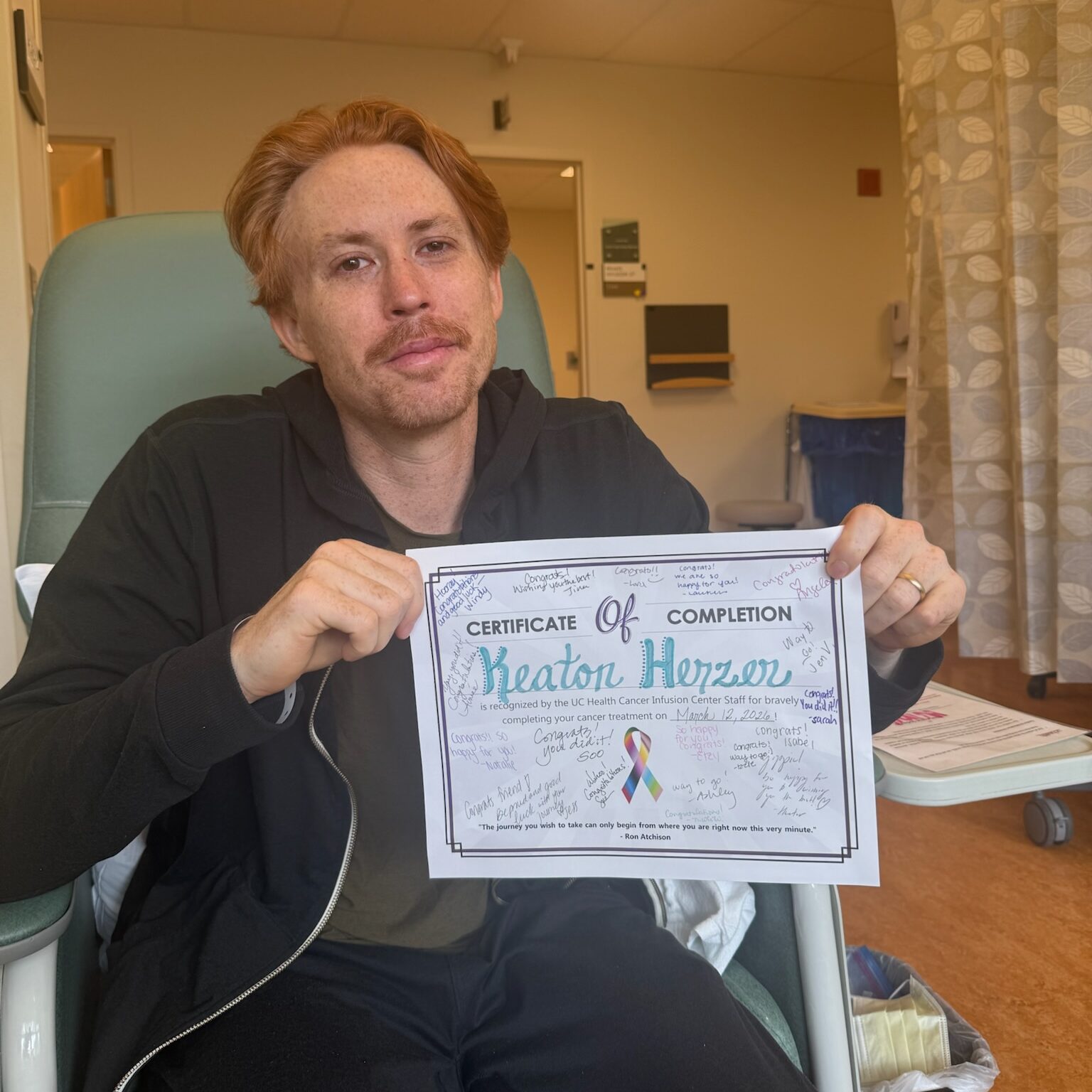
When Keaton Herzer was 34 years old, he received devastating news: he had intrahepatic cholangiocarcinoma, a rare bile duct cancer. As a healthy, young man, cancer wasn’t even on his radar as a possibility — until suddenly, it was the only thing on it. “I didn’t really have a lot of symptoms prior to my diagnosis,” he said. “It came out of left field. It was a huge shock.”
His diagnosis marked the beginning of a fight that extended far beyond illness itself. His life-saving treatment came with insurance denials, mounting financial pressure, and the enormous burden of navigating a fragmented health care system while fighting for his life.
Travel quickly became another challenge. After Keaton got connected with a cholangiocarcinoma specialist at Memorial Sloan Kettering Cancer Center in New York, he and his wife moved their family to Connecticut to be closer to his care team. He later traveled regularly to The University of Texas MD Anderson Cancer Center in Houston for additional treatment and a liver transplant. “That’s definitely an unexpected cost of getting a diagnosis, having to travel to find providers,” he said.
When his first course of treatment failed to stop the cancer’s progression, he and his wife knew they needed to look beyond standard treatment options. Together, they revisited his genetic testing results and identified a newly approved targeted therapy that matched a rare mutation in his tumor. But accessing that treatment required a months-long search. He consulted with dozens of oncologists across the country, many of whom were unwilling to prescribe the therapy because it was not yet approved for his specific cancer type. He eventually found an oncologist at UT MD Anderson Cancer Center who was willing to try the treatment.
Then, the day before his first infusion, his insurance company denied coverage. “I was on my way to the airport,” he recalled. “We had a choice of delaying my care or paying out of pocket.” Waiting was not an option. Keaton knew that delaying treatment could jeopardize his chance at a liver transplant, which offered his best chance to live. “I was like, ‘We’re not going to delay my care or postpone this treatment.’”
Instead, Keaton and his wife emptied their savings account to pay for it themselves. “We actually paid for two infusions out of pocket,” he said. “It was $77,233 per infusion.” Keaton described the experience as overwhelming, especially while trying to navigate unfamiliar medical and insurance systems. “I don’t know what I’m doing. This is my first time having cancer,” he said. “I have to navigate this system that’s designed to wear me down and get me to quit.”
For the next month, they spent hours every day appealing the denial while worrying about whether the treatment would continue. Although the insurance company eventually approved the treatment and later reimbursed both infusions, the financial damage and emotional toll had already taken hold. “We had drained all our money,” he said.
The targeted therapy successfully controlled his cancer and made him eligible for a liver transplant. But once again, his insurance company denied coverage, this time for the transplant surgery itself.
While he, his physicians, and his family pursued multiple appeals, he continued fighting for the care his doctors recommended. Eventually, the insurance company approved the transplant. His cousin became his living donor, and today he has no evidence of cancer. “I just got a scan two weeks ago that showed no disease, no metastasis.”
Even with that good news, Keaton says the experience fundamentally changed how he views the health care system. “You have cancer. You’re living scan to scan. Every three months, it’s like, ‘Am I going to live or die?’ And that’s stressful in and of itself. When you add to that, ‘Am I going to die and am I going to have to spend all of my money on this just so that I can die a little bit later?’ It’s crazy.”
His employer-sponsored insurance created additional obstacles because his employer is based in California while he lives in Colorado. As he searched for answers, insurance companies repeatedly directed him back and forth without providing clear information about his coverage. “I would call Health Net, and they would say, ‘We don’t have any record of this, you need to call Cigna’, and then Cigna would say, ‘We don’t make decisions about coverage, you need to talk to Health Net.’”
The lack of transparency was exhausting. “I don’t know how much I’m going to pay. I don’t know if this is going to get approved. I don’t know if I’m going to live or die. I don’t even know who to talk to that can answer these questions for me.”
Keaton also recognizes that his ability to fight for care depended on resources that many patients may not have. He had the time, energy, and support needed to research treatment options, appeal insurance decisions, and advocate for himself while battling cancer. “I had the resources and the wherewithal to kind of navigate this system,” he said. “So many people don’t have that.”
Keaton’s family’s financial burden extended well beyond medical bills. They paid to relocate multiple times, rent temporary housing, and fly to Houston every two weeks for treatment. “All of that is not cheap,” he said. “Flights are not cheap. Not everyone has the resources to do that kind of thing just to get care for their cancer. And they shouldn’t have to.”
Although he is grateful for the care he ultimately received and for the support of his family, especially his wife and cousin, he believes patients should never have to battle insurance companies while fighting a life-threatening illness. “I’m glad that I’m a very stubborn person,” he said. “But nobody should have to fight that hard just to get access to treatments that could potentially save their life.”
Add your voice to help us continue to push for the best health and health care for all.
SHARE YOUR STORY