



For those who don’t have coverage right now … try and find a way to be able to make sure that everyone’s covered because you never know when something can happen, especially for the children.

32-year-old Kristina Andrews has been a resident of Tampa, Florida since February 2025, working as an independent sales contractor selling a cleaning solution, spending most of the year on the road. Off the road, her life was simple — spending time with her three-year-old daughter, going to the beach, and participating in a pool league.
Kristina had worked in sales for years, but when she left the company that had provided her health and dental insurance to become an independent contractor, she lost that coverage and went uninsured. She shared that she never considered applying for Medicaid, “Just never really thought about it, just for the fact that I was working. Didn’t think I’d get approved.” Kristina felt young and healthy, and doctors’ visits were not on the forefront of her mind. She knows she isn’t alone in going without coverage. “There’s a lot of people out there that don’t have health insurance for the same reason as me, or they just can’t afford it for their families,” she said. “No one expects a catastrophic event to happen to you. And then, when it does happen, you’re kind of screwed when you don’t have insurance.”
On June 17 2025, Kristina was hanging lanterns around the top of her balcony on the fourth floor of her building. The stool she was standing on wasn’t very sturdy. “That was just me being dumb,” she said. She fell from the fourth story onto the cement walkway below. She does not remember the fall itself. “The next thing you know, I woke up in a stretcher in the hospital, with the chaplain over me, telling me to say my last words because they thought I wasn’t going to make it.” Doctors told her she was going to be paralyzed from the neck down, but they were wrong. “I can move my right leg,” she shared, “And also just started moving my left toe, so that’s a really big sign.”
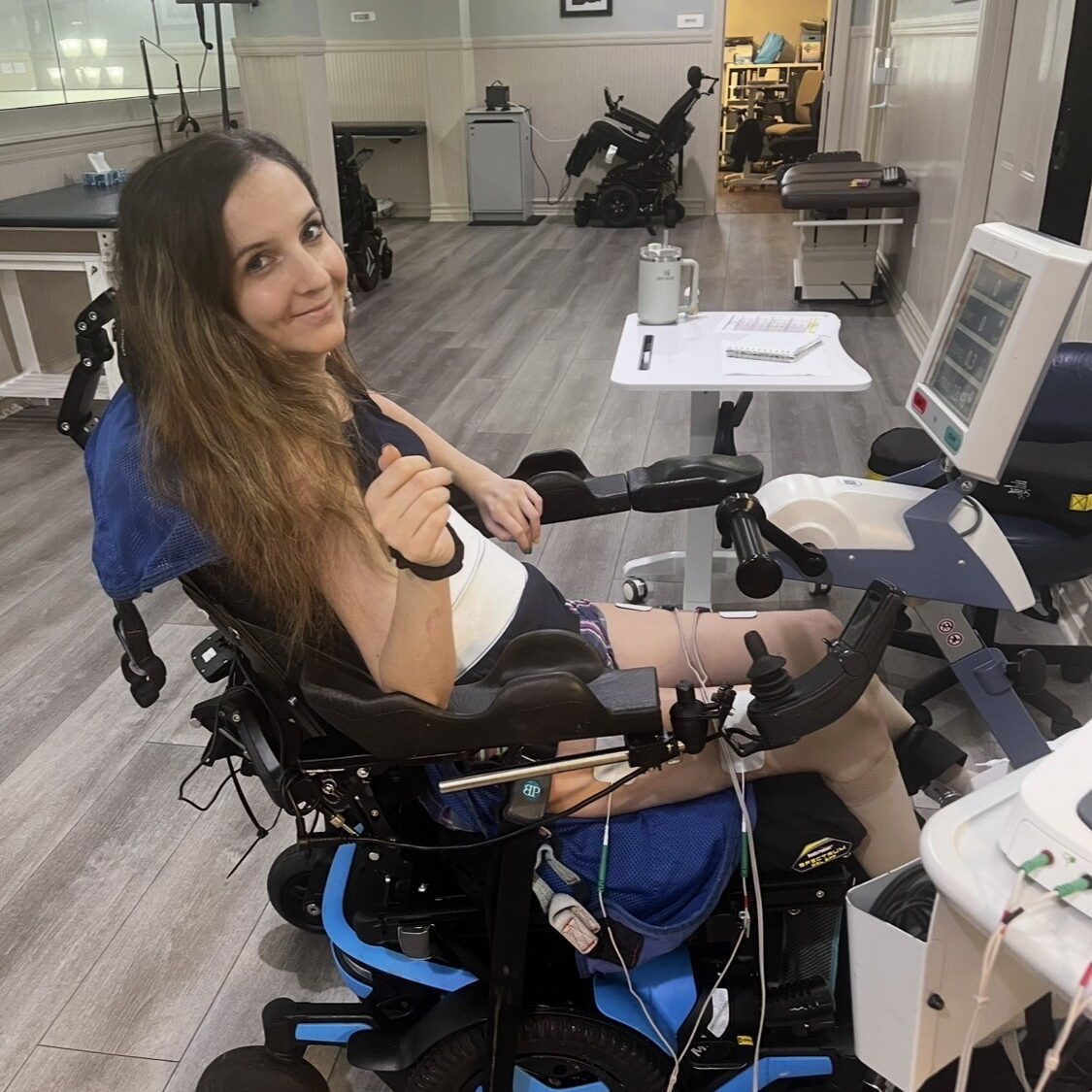
The injury, a spinal cord injury at C6, changed her life in ways that go far beyond walking. She has had multiple surgeries, including pelvic surgery, surgery for two back fractures, surgery on her rib cage, and surgery on the back of her neck. Her blood pressure has to be monitored, and she is working toward being able to use the bathroom independently.
Kristina has a 40 percent chance of walking again, and the road ahead involves years of physical and occupational therapy. She has chosen to meet that challenge with determination. “I’ve gained a lot of patience since my injury… and a lot of just thankfulness, being grateful for the little things that are coming here and there… no matter how small or big,” she said, adding, “I know some people get down, feel depressed, and they don’t try, and so they don’t meet their full potential… Me, I’m trying to take it a different route and just keep staying determined and active and going through therapy and put my 100% into it.”
At Neulife, the rehabilitation facility where she has been receiving care, Kristina had a speech therapist, an occupational therapist, and a physical therapist. When she arrived, she couldn’t lift her arms and had no voice for 30 days. “It was really scary just seeing my body kind of limp there, wondering, ‘Where am I going to be?'” Even sitting up was a struggle at first. Slowly, things changed. “Finally 10 minutes I can sit up, 15 without getting dizzy. Now I’m sitting up on my own, and I can take a shower and do normal things in my wheelchair without feeling I was going to pass out.” She described the first three months of recovery as a period of fast, visible gains, followed by slower progress that requires patience.
While she was unconscious in the hospital, Kristina’s mother and sister flew in and worked with a caseworker to file on her behalf for disability and Medicaid. Tampa General Hospital approved one month of coverage for her, and then a second month. Her coverage there ended on September 20, 2025, and she has been without coverage ever since. “Medicaid never took over because they will not pay for acute rehab for more than two weeks,” she said. She was told about another option, a rehab facility in Jacksonville, but Medicaid would only cover two weeks there too. “I would go all the way out there just to have two weeks of therapy, and then I don’t know where else I’d go after that,” she said. Medicaid does cover 24-hour nursing facilities, but they couldn’t provide the level of care she needs.
Kristina later learned that even if she had been insured through Medicaid at the time of her fall, it likely wouldn’t have changed her situation. “They actually don’t even cover catastrophic events like mine,” she said. “So, regardless of whether I had insurance through Medicaid, it wouldn’t have done anything at that time anyways.”
The cost of her lifesaving care has been astronomical. Her 30-day hospital stay came to over $1.5 million; Medicaid covered $23,000 of it. Her rehab facility costs $900 to $1,000 a night, and she has owed all of it herself since her coverage expired. “I haven’t done the math on it because I just know it’s a lot,” she said. “I’m not going to be calling up for any payments to the hospital anytime soon.”
Asked what she would tell herself before the accident, Kristina said, “I was one of the individuals that didn’t really think about having insurance because of my age. If I could go back in time, it would definitely have been something I would have looked into, making sure that I’m covered. I’d also remind myself just to be more appreciative of what I have…Just to be grateful.” She added a message for anyone who is uninsured: “For those who don’t have coverage right now … try and find a way to be able to make sure that everyone’s covered because you never know when something can happen, especially for the children.” She also encourages others to lean on whatever support they have. “I just hope that people out there reach out to whoever they need to, their loved ones, and let them know, you know, this is how I’m feeling and what I’m going through.”
Today, day-to-day life for Kristina is challenging. She cannot shower, get dressed, make her bed, or brush her teeth without help, and she was told she will never be able to put her hair up by herself because of how her injury affects her arms against gravity. Small setbacks still happen — recently, her wheelchair hit a bump while shopping, and she fell forward, unable to push herself back up until an employee helped her. “It’s just, like, all the little things that add up to difficulties,” she said. Still, she measures progress in small wins: she recently asked for three-pound hand weights, after one-pound weights had been too heavy just weeks before. “Every day, it’s just getting better, getting stronger, but it’s a learning curve,” she said.
Kristina shares her story, she said, not because she enjoys revisiting what happened to her, but because of what has come from it. “I want to be someone that can advocate for other people, and that’s why it is easier to share my story,” she said. “I’ve been working hard to get my story out there so others that may have had problems with their insurance or may have had problems with where they were placed can relate. And maybe my story reaches them to the point where they’re like, oh, maybe I can ask for this, or I can try harder… look where she is to where she started. It’s not impossible, so maybe I can do it too.”
Her message for policymakers is direct. “Medicaid needs to cover catastrophic events,” she said. “There are a lot of people that can’t afford insurance or are not working or disabled. They’re not getting the care that they need… which could happen to anybody at any time.” She also pointed to the system’s unrealistic timelines: “You’re not going to be cured or to your full extent, full potential in a couple of months. This is a process that’s going to take years.” For those who can’t stay in a rehab facility long-term because of children or other responsibilities, she said, there needs to be another way — like covered 24-hour home care. Until Medicaid covers catastrophic events like hers, Kristina said, patients like her will keep accruing debt they have no way to pay — a reality she’s living with every night she stays in rehab.
Add your voice to help us continue to push for the best health and health care for all.
SHARE YOUR STORY