



If you want your public to be safe, then everyone should have absolute equal access to health care.

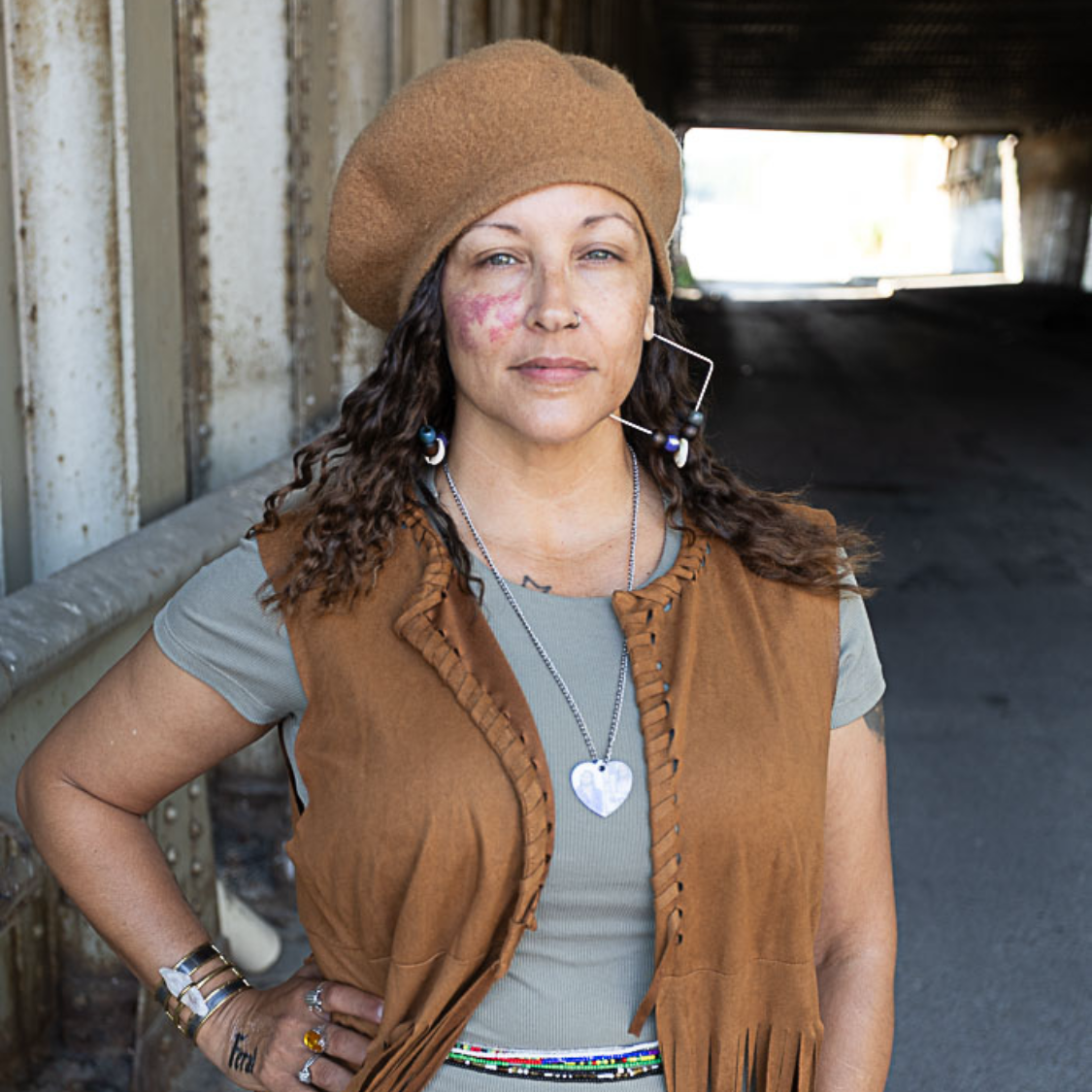
Nature Jackson is 45 years old and the mother of six children. Her relationship with health care was shaped long before she ever had insurance to worry about. “I was stolen from my mother at nine,” she said, and she was never returned to her family. What followed was three decades moving through foster care, the juvenile justice system, and then adult prison. “I navigated through that for 30 years of my life and through that time definitely wasn’t getting proper dental care, medical care, mental health care.” Nature said her treatment in those systems was tied to how she was seen because of her background. “Due to being Indigenous, Creole, Cuban, having Black, just all these different nationalities,” she said, she and other children like her “were not seen as children, let alone people.” She was labeled violent, chained, and often held in solitary confinement, conditions that meant she wasn’t receiving proper nutrition, let alone any medical treatment.
Since then, Nature has gone to college, earned a degree, and completed certifications that support her restorative and peer support work. Even so, she does not feel the system sees her differently. “Letters behind your name don’t provide the respect and dignity that I think we should all receive,” she said. “I’m not in the bracket that is allowed proper care and concern and that dignity I speak of.”
Because she grew up without routine medical or dental care, Nature said she had to teach herself, as an adult, what basic health care for a family was even supposed to look like. “I would really have to study how to remember like, oh, we do dentist appointments for children, right? That wasn’t something I understood.” When she asked questions or admitted she didn’t know something, she said she was met with judgment instead of help. “So, you start to not be transparent about your experiences and that you’re learning something for the first time.”
She has also watched how the type of coverage a person carries changes the way they’re treated in a waiting room. “You might walk in and it’s bright smiles and welcome, welcome. But once they see the type of insurance you have, now you and your children are being treated very different.” She pointed to a specific example involving one of her children: she had chosen not to vaccinate her kids, and after she became incarcerated, her daughter was given every vaccine she had missed in a single day, in one setting. “It was a very traumatic experience for her to this day. She still struggles with that experience.” Nature said her own read on the situation was direct: “If we looked different and had different last names and different bloodlines and different status, if you will, that would have never happened to my daughter.”
She described a similar pattern during childbirth. During one delivery, she said she was induced and the Pitocin was turned all the way up and left there instead of being adjusted once her contractions were underway. “There’s been a lot of traumatic experiences in those pregnancies and births even.”
One of the most painful experiences Nature shared involved an injury from domestic violence. She had broken her sternum and her collarbones and initially thought she was having a heart attack. She waited until she could safely get away before seeking care. “I was able to slip away working, right? And I snuck to the hospital and I thought, I’m just going to tell these people what really happened so that they know what caused this.” Instead of the response she expected, she said, “I was treated terribly,” and no one asked whether she was safe. It was only later, in conversation with someone who explained hospital staff had assumed she was seeking pain medication, that she understood what had happened. “That validated my whole life,” she said of finally having language for the experience. Because the injury was never properly treated, she now lives with calcium deposits that healed incorrectly.
A second relationship also involved domestic violence, and during that period Nature learned she had a broken neck, an injury that built on the earlier damage to her spine. “Had we maybe found out the first time what went on… this second injury that happened further took that injury over the edge.” That visit, unlike the first, resulted in real answers. But it also marked the start of the debt she is still carrying. She was prescribed physical therapy that was helping restore movement in her arm, but she said she had to bring payment to every appointment. “Every time I was going into the orthopedic doctor… I had to have money with me, and I didn’t always have it … So, I stopped going to the appointments. And I canceled my PT.” She estimated her total medical debt at a minimum of $50,000 and said it is likely closer to $80,000 or $100,000 once everything from testing, imaging, and blood work is added up. “I didn’t know that was so expensive,” she said, describing seeing the bills for the first time. “If this is cost this much, I can’t imagine what a surgery would cost.”
One person at the orthopedic office worked out a $20-a-month arrangement with her, which Nature credits to that staff member personally rather than to the system itself. “She’s an absolute earth angel… had that been anyone else, that wouldn’t have been what happened.” The rest of the bills remain unresolved and have already affected her credit.
Nature also lives with fibromyalgia, which she attributes to nerve damage from the injuries she’s described. She said providers have often responded to her pain with medication she didn’t want. “That’s their answer here. Take all this stuff. It’s stuff that will have you literally comatose. You can’t go to work. You can’t be a mother. You can’t go to school.” At one point she nearly went on disability because she couldn’t walk, but said she couldn’t afford not to work, which led to repeated conflict with employers. She has had to manage the condition largely on her own. “I can’t afford to go to the doctor three and five times a week or even deal with medicines or get a dietician.”
Nature said she got insurance through her job about a year ago but didn’t understand how to use it and rarely did. She upgraded to a better plan roughly six months ago, around the same time her neck injury had progressed to the point that she’d lost motion in her left arm. “My body was deteriorating. So, I was kind of forced to go and didn’t really have a choice in the matter anymore.” Even with insurance, she said she has been told she eventually needs neck surgery but has had to delay it. “I will never be able to afford a neck surgery or the copay or whatever else goes with that that I don’t know about. It’s just not going to happen.”
She also described a period where she was covered by Medicaid, which she said allowed her to get care for emergencies, including a broken tooth she otherwise went without treating for about a month and a half. “When I had Medicaid, I was able to at least go find the care, even if I was being treated rudely.” Dental care in general has been out of reach for her. “If I have to go to a pantry to get toothpaste, how am I going to go to a dentist for $300, $400 cleaning?”
Nature said no one ever told her about charitable care programs, hospital financial assistance, or other resources that might have helped with her bills. “If that was shared with me, I would have utilized that… why would I not know that?” She said the way she has been treated often shifted the moment staff learned she didn’t have insurance. “Oh, you don’t have insurance… I’ve never felt more disrespected in my life.”
Asked what she would want public officials and federal lawmakers to know, Nature connected health care directly to the language policymakers already use around safety. “Health care is a part of public safety, truly in a, probably a manner of which we don’t often think or speak of, but it’s part of our basic life needs, right? … And if you want your public to be safe, then everyone should have absolute equal access to health care. Our communities will thrive.”
Add your voice to help us continue to push for the best health and health care for all.
SHARE YOUR STORY