



We’re one community. We’re one big world…We can’t heal one person without healing everybody.

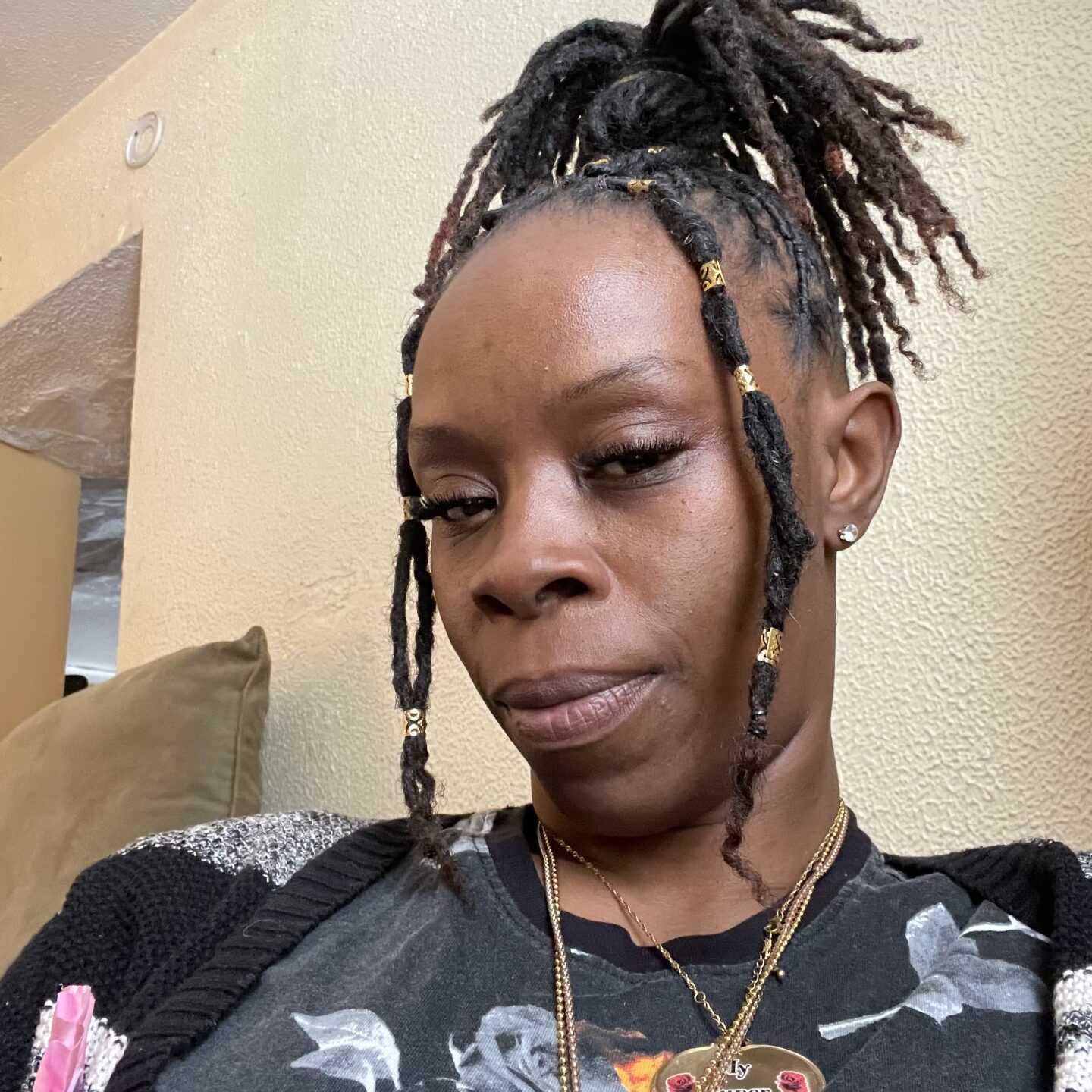
Qutisha Britt is the mother of a seven-year-old daughter, and getting her daughter the mental and behavioral health care she needs has meant fighting a system that keeps putting up walls instead of doors.
About two years ago, Qutisha’s daughter began going through emotional and behavioral challenges, and the family turned to Medicaid for help. But getting connected to services didn’t mean getting the right ones. “There were a lot of barriers that were set up,” Qutisha said, describing how she and her daughter kept being steered toward programs that weren’t a match. “And me and my child weren’t able to use the services that they wanted us to.” Watching an opportunity go unused was hard to accept. “I felt very disappointed because I know if they would have gave it a try, it could have been a service that my baby could have benefited from.”
She said providers “felt as if she didn’t need the type of therapy that they had her signed up for,” and instead of adjusting course, kept shifting her daughter to different systems altogether. Qutisha sees that as exactly backwards. “We know with our babies, early childhood intervention is a major thing with them,” she said. “If we can get them any type of support and services while they’re younger, that’s the best time to really be able to help our children.” She added plainly, “I think some providers and health care systems don’t get that.”
Qutisha’s daughter has asthma and needs inhalers to manage it. Qutisha needs inhalers too, for breathing issues of her own. Both are costs she has to keep up with on top of a Medicaid system that doesn’t always come through when it’s supposed to.
Qutisha also described a pattern she’s seen play out again and again: families are expected to show up, and when something goes wrong, they get bounced to another system rather than helped through the one they’re already in. “They expect us to show up for these appointments,” she said. “And then when things don’t go right, they expect us to keep going through different systems … And that can be very draining and discouraging for families that already don’t have a voice and can’t navigate these types of systems for themselves and don’t have support from family and friends.” Despite the setbacks, she kept advocating for her daughter, tracking down other services the agencies hadn’t offered on their own, even though the services her daughter actually needed weren’t ones they could provide.
Transportation has turned out to be its own maze. Even with coverage, a ride to an appointment is never guaranteed, and when one does show up, the timing rarely works for a family already stretched thin. “Transportation is a big thing,” Qutisha said. “They take you up an hour before your appointment, and they are not sometimes available to pick you back up until God knows when.” No one asks families how the system should actually work for them, she said — it simply gets handed to them, helpful in some ways but, in her words, “hurting families” in others.
Even families who qualify for services often run into another hurdle: the cost. “If we are already families that are struggling, how do you expect us to pay a copay for medicine or appointments?” she said. “It’s not okay.”
After seeing a doctor for her knee, she was left holding a bill Medicaid should have paid. “I received a bill for $750 because I went to a knee doctor and had to get services for my knee,” she said. “So guess what? I have a $750 bill. Why hasn’t Medicaid paid that bill? Why are they telling me I have to connect with their financial services to get a bill paid that should have already been taken care of by Medicaid?” Her experience reflects a broader frustration among Medicaid recipients, who often find themselves caught in paperwork and red tape for care that should already be covered.
Recently, Qutisha went back into mental health care herself, and ran into the same kind of cap she’s seen elsewhere in the system. Her provider explained that “our goal and our plan is only for six months,” she said. “So what happens after six months? … That makes people go back into the same bad habits and the things that they’re trying to get help with.”
Qutisha advocates for housing, health care, early childhood intervention, poverty, and homelessness. Her message to policymakers is direct, built around a question she wants each of them to sit with honestly. “How would you want somebody to make sure that you’re able to afford your medication, be able to go to a mental health appointment, be able to have your child in behavioral therapy, play therapy?” she said. “How would you feel if all that stuff was swept up from under your feet and you know that’s what you needed to survive?”
She closed by highlighting the importance of community. “We can’t make our community better if we don’t think about everybody,” she said. “It can’t be one group of people we’re helping and the other group of people we can’t help. No, we’re one. We’re one community. We’re one big world. So, we have to make everything equal for everybody,” adding, “We can’t heal one person without healing everybody. And this is how we start.”
Add your voice to help us continue to push for the best health and health care for all.
SHARE YOUR STORY