



I think the number one thing would be that my health probably would decline if I did not have Medicaid to help.

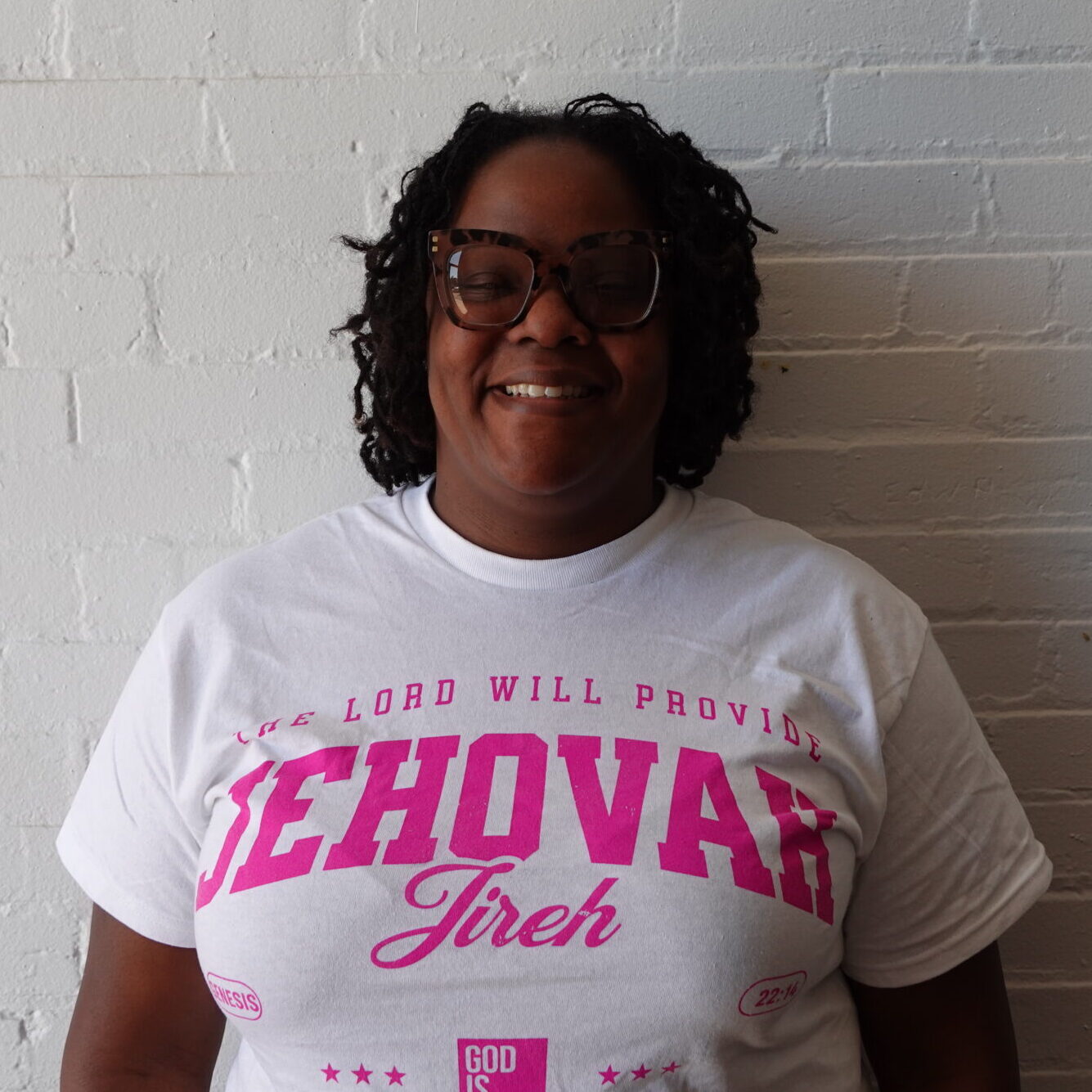
Shanelle Woods lives in St. Louis, Missouri, and has polymyositis, a rare autoimmune disease, along with interstitial lung disease (ILD) and severe asthma. She spent most of her adult life working, including a position at Washington University where she carried employer-sponsored health insurance. Because of her income level, she also received Medicaid as secondary coverage. In 2021, that secondary coverage became her lifeline.
When her conditions were diagnosed and her treatment regimen was not working, Shanelle had to step away from her job. The physical demands of her field, which required lifting and transporting patients, had become impossible to meet. She went out on FMLA leave, which transitioned into short-term disability. Her employer could not hold her position. When long-term disability did not fully come through, she found herself relying on Medicaid entirely. “If it wasn’t for Medicaid, picking it up after leaving or being done with work, I don’t know where I would be,” she said. “Probably not even receiving half of my treatment.”
The scope of her medical needs is significant. Shanelle takes two steroid medications for her asthma, requires infusion procedures every six months, and is currently being monitored for lung nodules that require CT scans every six months. One medication alone costs $800 per month. “The preventive care is the most important thing for me,” she explained. “Being able to monitor my lung nodules every six months with a CT scan is something that I need right now. So, Medicaid is definitely playing a big part in that.”
Shanelle grew up in foster care. She is clear-eyed about what it means to start without advantages, and she pushes back directly against the idea that people who rely on government assistance do not want to work or improve their circumstances. “For the most part, most of people’s belief when they say that they don’t believe in Medicaid are usually individuals that have access to health insurance and have personal health insurance, but individuals like myself that has worked most of their lives but do not meet the income requirements to fully be able to sustain healthy living or healthy insurance on their own can challenge that.”
Even with coverage, Shanelle has faced real barriers to getting the care she needs. Getting approval for shoulder MRIs has been a persistent struggle. Despite documented deterioration caused by her polymyositis, Medicaid requires her to cycle through physical therapy, pain management, and steroid injections before approving an MRI referral, even after her own doctors and physical therapist have already determined those treatments are not effective. “It’s like, in a sense, wasting money,” she said. “You’re avoiding the MRI but wasting money to continue for me to do the physical therapy, which the physical therapist and the doctor already recognize that it’s something that’s not helpful for my treatment.”
The administrative burden has extended beyond her medical care. When she was navigating disability applications while also receiving Medicaid and SNAP benefits, she faced invasive questions at every review: Why was she not working? How was she paying her bills? Who was helping her? For someone managing a chronic illness that fluctuates day to day, those questions created an impossible bind. “You want me to work through the pain, but then at the same time, if I go and work, disability would say that I’m not qualified,” she said. “So that was the mix-up and the challenge.” The situation left her feeling defeated. “I know that I probably would qualify for disability, but I don’t want to apply for it because if I work, you’re not going to approve me. If I don’t work, then you’re saying I’ve got to do something. So, it’s a catch-22.”
If Shanelle lost her Medicaid coverage, she says the consequences would be immediate and severe. She is raising her children while managing her multiple serious conditions, and without coverage she would face impossible choices between medication and basic household expenses. “I know just one medication alone was $800,” she said. “If I’m needing that every month alone, with meeting my bills, it would be very hard for me to have a healthy life or to be able to provide for my children or be able to provide for myself.” She knows herself well enough to predict what she would sacrifice first. “I think the number one thing would be that my health probably would decline if I did not have Medicaid to help.”
Shanelle wants lawmakers to know, “We all have not had the privilege to have the equal start. But we all deserve the equal outcome, and that’s access to health care services.” She asks policymakers to see the people behind the program and to resist making an already difficult system harder to navigate. “We’re forgetting to be human,” she said. “We’re forgetting to see people as humans, people with emotions, people that have challenges.” And she is direct about what she needs from those in power: “We don’t need anybody to come and just make it harder.”
Add your voice to help us continue to push for the best health and health care for all.
SHARE YOUR STORY