



I have to make sure I’m an advocate for myself, because if not, no one else will be.

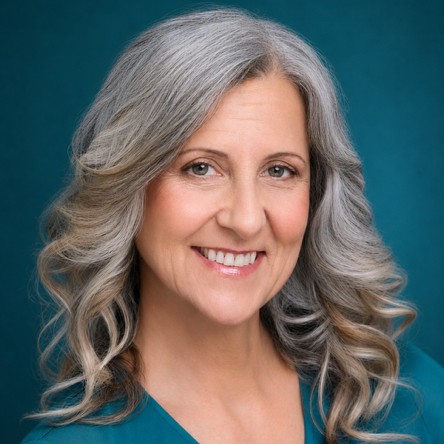
Lynnette Bidwell has a Marketplace health plan this year, but it doesn’t include her primary care doctor. To see him, the Central Florida resident pays out of pocket. “I hate to say this, I feel like I’m uninsured right now,” she said. “I do and I don’t.”
For Lynnette, who lives with chronic pain after three surgeries, the Marketplace has made coverage possible, but not affordable. “I’m grateful that because I do have pre-existing conditions that they are covered, but it’s not, it’s coming at a price,” she said. “It’s coming at a financial price and I’m like paying out of pocket for it.”
Those conditions shape her daily life. Lynnette had surgeries in 2008, 2012 and 2020, and she has been working with specialists “for depression, anxiety caused from the trauma of all my surgeries, and chronic pain.” She said, “I feel very fortunate that the surgeons I did have were phenomenal.” She also knows what insurance companies have paid out for that care. “Like my first one was about $160,000. By the end, it was $280,000. And that’s putting in physical therapy, all the testing prior, all the co-pays, everything,” she said.
Recovery brought a lot of physical therapy and lasting limits. Two of her surgeries were cervical, which limits how far she can turn her head. If she raises her arm above a certain level, it loses circulation. “Driving a car, I have to turn my whole body instead of just my head … So I’m always concerned of being rear-ended.” She now has deterioration in the disc above her two cervical surgeries and has to be careful about what she lifts and how she lifts it. “So on the outside, I look very healthy and happy. But every day is kind of a struggle, and I am limited, and I have to be very conscious of what I do.”
Through it all, Lynnette kept working. She spent 42 years in retail, most recently in management and leadership at New Balance. “Retail is so physical. You’re walking eight hours a day. You’re lifting. You’re bending. You’re twisting. You’re unloading 300 boxes,” she said. Going to work kept flaring up her symptoms, and her depression was getting worse. Pain medication brought its own problems. “You can’t really think clearly,” she said. “It starts affecting your cognition.” She found herself rereading pages and forgetting formulas she had used for years on the job. Her family physician, whom she calls “kind of my gatekeeper for all my MRIs, my CAT scans,” made the call. “So the medication starts taking a toll on you, and he said that it was time. So I filed for disability.”
She was approved last September, within three months. “Social Security was surprised that I’ve been working as long as I have,” she said. “They were like, well, you definitely didn’t try to get out of working.”
Lynnette knows what good coverage feels like. At work, she had employer-sponsored insurance and always picked plan A “because it covered everything. I could see any specialist I wanted to. I didn’t have to wait for prior approval. It was really simple, easy, and I had everything coordinated through my primary.” When she went on disability, she needed coverage to bridge the gap between her current age and 65. Someone recommended a navigator named Anne, and last April they set up a Marketplace plan that kept all of Lynnette’s specialists in network. “We were done in, like, a half an hour,” she said. “They make it magical.” Of that 2025 plan, she said, “It was amazing. Everything was covered. You could go to any primary, any specialist. There was no prior authorization.”
Then the enhanced premium tax credits expired. Lynnette expected renewing with Anne to be as easy as the year before. “We both gasped on the phone for the same insurance when it was 589% [more],” she said.
Instead of paying the increase, Lynnette chose less coverage to keep her costs affordable. She and Anne spent three phone calls, each about an hour long, searching for a plan that covered her specialists and her primary care doctor. “And we just could not do it without it costing a fortune,” she said. She settled on a plan that covered three of the specialists she expected to need for the rest of the year, giving up her vision coverage and her primary care doctor. “So there were things, like the price went up, but then they took away some key, key pieces.”
Lynnette could not find a new primary care doctor on her plan. The providers listed on the website were all physician assistants, and every time she tried to book an appointment they were full. She searched within 50 miles, then checked Miami, Jacksonville and Orlando. “How can there not be any primaries?” she said. Now, she said, “if I have bronchitis, I just go to ReadyCare and I pay $50 out of pocket.” Rather than wait for an in-network appointment that was sometimes almost a month out, she decided she would pay to see her regular primary care doctor. “I’ll have to just pay it.”
Medication has become its own fight. She contrasted last year with this one: “2025, I could just make an appointment, pay the co-pay, and almost all my medication was, there was no expense. This year, there’s an expense.” Her new plan requires prior approval for medications she did not need it for before, and her doctors must write letters explaining why she cannot switch to cheaper options. “So you better hope you have enough medication to carry you through,” she said. In April, a 90-day supply of one of her medications cost her nothing with a coupon applied. At her next refill, the pharmacy charged $130. Lynnette brought both receipts back to the pharmacy and asked why. The pharmacy reprocessed the claim so she would not have to pay, but getting her medication took an extra two to three days.
Lynnette lives alone, even though Social Security Disability said she should not. “It’s a personal choice,” she said. “And so I have to make sure I’m an advocate for myself, because if not, no one else will be.”
Every new cost forces a choice. On a limited budget, her insurance costs come on top of rising prices for utilities, groceries and medical copays. “My worries was how it was going to affect my care,” she said. “You’re just like, oh, what am I going to have to start giving up?” She began crossing things off her list. “No extra coffee,” she said.
With those numbers in mind, Lynnette worries about what a surgery would mean if her costs keep rising. “That it could financially devastate me,” she said. For now, she is “just hoping no major illness.”
“I think it’s not just for me, it’s for everybody,” she added. “You’re basically being priced out of your health, and you’re being priced out of being able to afford things for your family.”
Her message to lawmakers is that “there’s a person behind it that is really impacted by their decisions that they make. And that everybody should be entitled to have health insurance and not have to make a decision to go into financial hardship if they don’t.”
To Lynnette, affordable health care means “it’s accessible to everybody. And that is not just the wealthy.” Instead, she said, “they’re always changing it and modifying it and taking things away, but they’re not really giving anything back.”
Add your voice to help us continue to push for the best health and health care for all.
SHARE YOUR STORY